
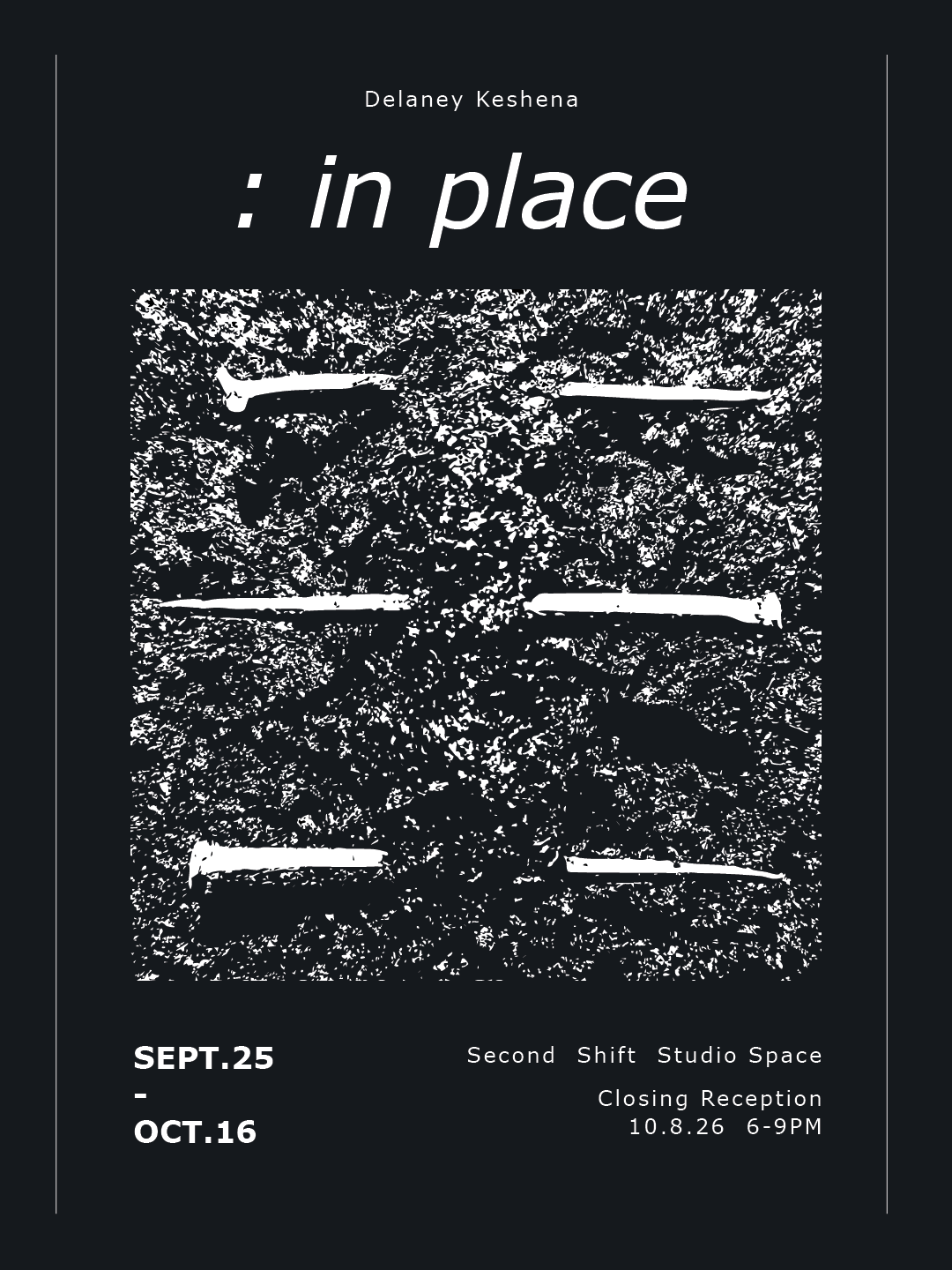
: in place, solo exhibition by Delaney Keshena
Closing reception: October 8, 6-9 pm
Gallery hours: September 26, 27 & October 3, 4, 10, 11, 12-4 pm
Developed throughout their 2025-26 residency : in place offers a collection of mappings through sculpture. The title of Keshena's solo exhibition : in place, borrows from the term in situ, a reference to an object in its 'natural or original' position. These sculptures—crafted from wood, steel, and found objects—draw their forms from Indigenous methodologies in mapmaking and serve as acts of witnessing place. Each piece in this show is anchored to a specific site in Minneapolis and weaves together personal and communal histories gathered over the past year.
Delaney Keshena (Menominee) is a visual artist and educator based in Minneapolis, MN. Keshena uses hair, skin, and glass to craft objects that relate stories of family, nation, and contemporary Indigenous experience. They've recently completed residency programs with ACRE and Second Shift Studios. Delaney is currently a Studio Artist with Public Functionary.
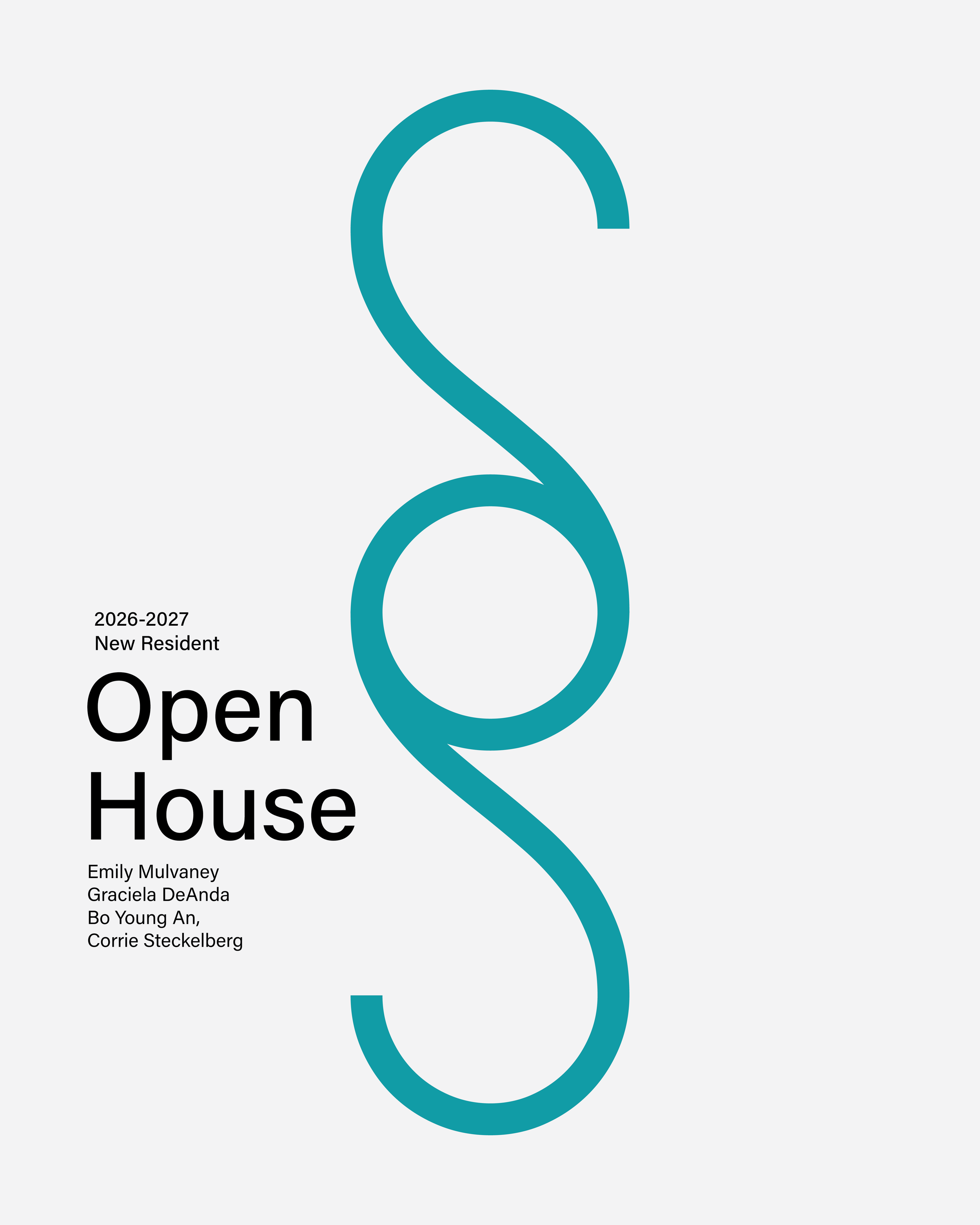
2026 Open House
Join us for our 2026-27 New Resident Open House!
—
Opening Reception: September 3, 6–8 pm
Gallery hours: September 5, 6, 12, 13, 12-4 pm
—
The Open House shares the work of our new 2026-27 Resident Artists: Emily Mulvaney, Graciela DeAnda, Bo Young An, and Corrie Steckelberg. Stop by to meet the artists, tour the studios, and see their current work.
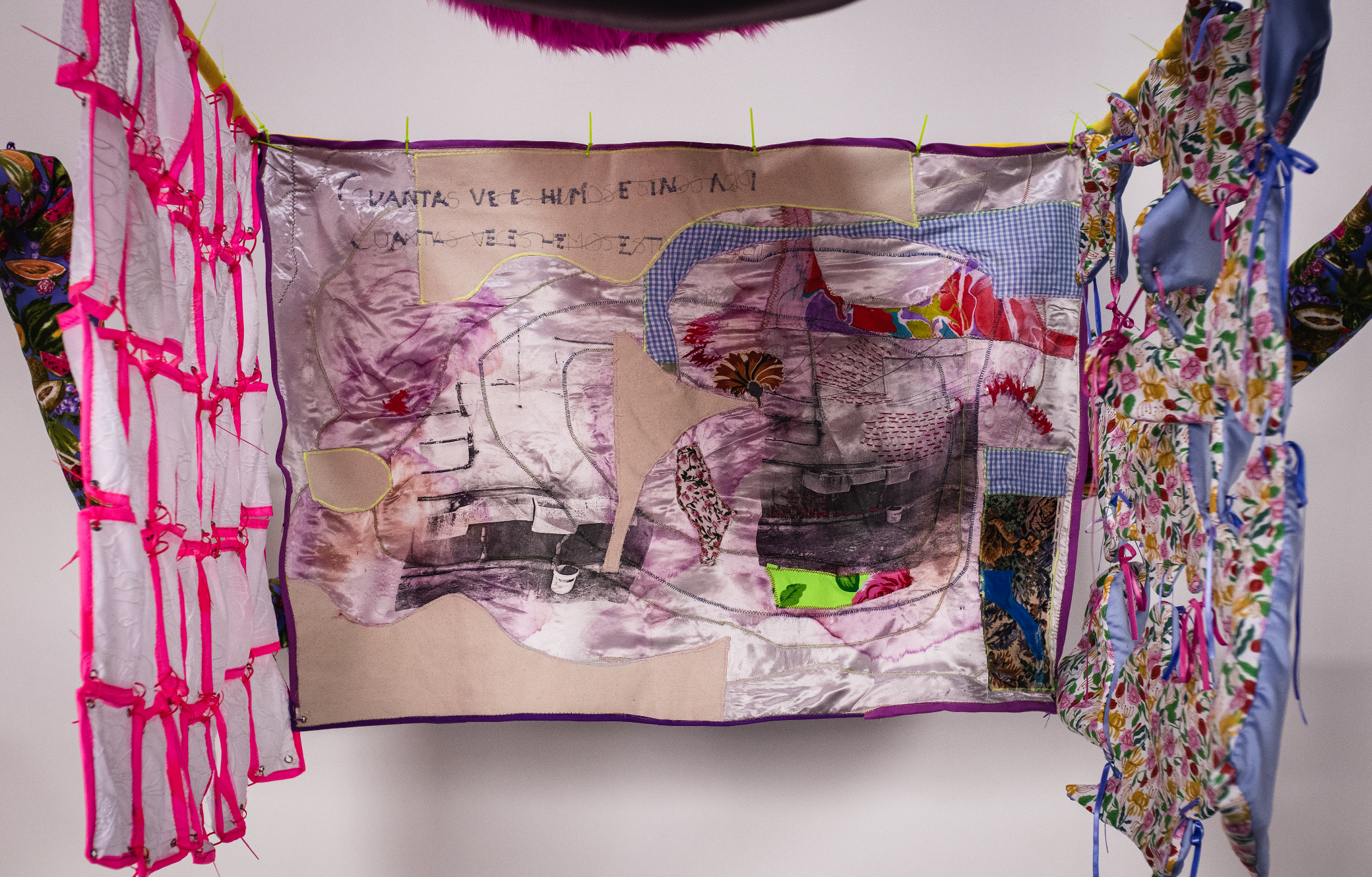
Inventario Íntimo: Solo Exhibition by Ivonne Yañez
Opening reception: July 31, 6-8 pm
Gallery hours: August 1, 2, 8, 9, 15, & 16, 12-4 pm
Art Soup: August 25, 6-8 pm
—
Inventario Íntimo examines how ordinary domestic objects become repositories of memory, identity, and belonging. Familiar items such as a coffee pot, a comb, and a mirror are reimagined at an enlarged scale, disrupting their everyday function and inviting sustained attention. Through this shift, the exhibition considers how repeated gestures and daily rituals shape one’s experience of home.
Working primarily with textiles and soft sculptural forms, Ivonne Yáñez transforms commonplace objects into bodily presences. Their altered scale and tactile surfaces blur the boundaries between object, architecture, and body, suggesting that domestic space is not only inhabited but continuously constructed through routine, care, and memory.
Created while moving between Mexico and the United States, these works have reflected on the instability of home under conditions of migration. Rather than depicting displacement directly, they attend to the quiet accumulations through which absence and attachment become embedded in material culture. The familiar becomes unfamiliar, allowing everyday objects to function as sites where personal and collective histories converge.
Intimate Inventory invites viewers to consider what is carried across places, what remains after movement, and how the body itself can become a vessel for belonging when the idea of home is continually redefined.
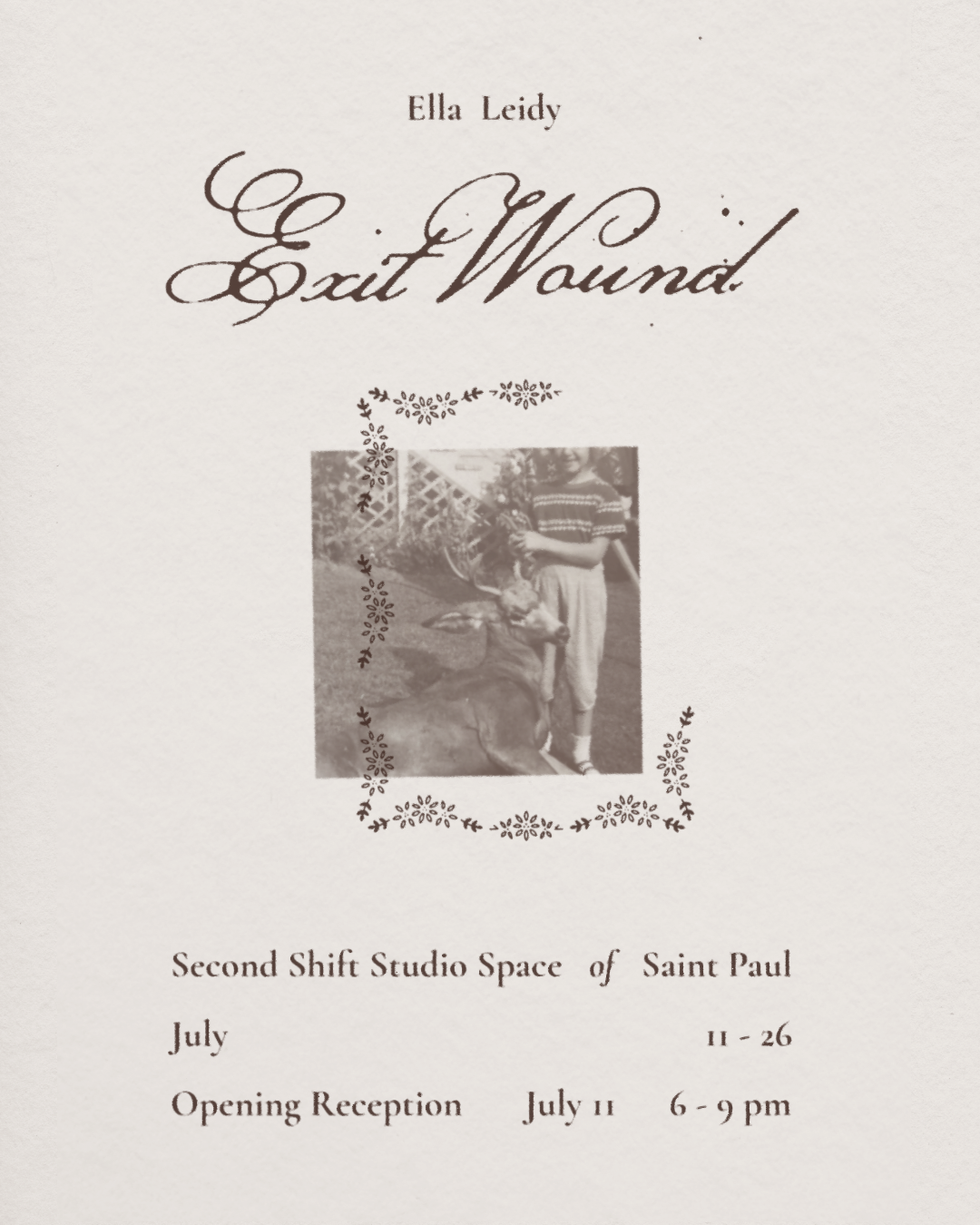
Exit Wound: Solo Exhibition by Ella Leidy
July 11–July 26
Opening Reception: July 11, 6–8 pm
Art Soup: July 20, 6 pm
—
Ella Leidy’s Exit Wound reflects on the enduring presence of death in the domestic everyday, where grief becomes a part of the objects we inherit, the traditions we maintain, and the rituals we perform. Through the lens of deer hunting practices in the rural Midwest, the exhibition explores death as a moment of material change that marks the transformation from object to heirloom. The work, developed during Leidy's residency at Second Shift, examines how gender and identity are preserved and passed down through physical objects. The body itself is positioned as an heirloom of its own through the use of blood and hair, referencing both historical mourning customs of bodily preservation and taxidermy practices. These gestures make grief inseparable from the items that embody it, bridging the gap between memory and material.
Caring Nature Study Group: Session 7
Caring Nature
Join current Resident Artist Prima Jalichandra-Sakuntabhai for a study group on community care and nature stewardship in anarchist practices
Session 7: June 14 or 21 TBD
Final Potlatch
We invite past participants to come together for a final potlatch, based on rules that we have collectively written throughout the different sessions. The Potlatch Rules will be sent out early- come prepared to bring gifts in the form of food, objects, services, performances, etc... as a celebration of community, life and the things that keep us whole.
Please mask upon entry to the space. We will decide as a group whether or not we will keep masks on during the session. Masks are provided.
About Caring Nature
What is the value of human life outside wage/labor and consumerism? How do we sustain ourselves and our community without being extractive and destructive to the environment? How do we learn to organize collectively, socially and politically in relation to Nature?
In Peter Kropotkin’s book, Mutual Aid (1902), the Russian anarchist posits that cooperation, not competition, is at the base of natural evolution, both in animal and human groups. He traced the evolution of voluntary cooperation from the tribe, peasant village, and medieval commune to a variety of modern associations—trade unions, learned societies, the Red Cross—that have continued to practice mutual support despite the rise of the coercive bureaucratic state. The trend of modern history, he believed, was pointing back toward decentralized, nonpolitical, cooperative societies in which people could develop their creative faculties without interference from the governing bodies.
A modern example is the ZAD, the French rural militant occupation and autonomous zone, which successfully halted the construction of an international airport. In We Are 'Nature' Defending Itself. Entangling Art, Activism and Autonomous Zones by Isabelle Fremeaux and Jay Jordan, the preservation of swamp lands by communal occupation becomes a radical political action against climate disaster and extractive capitalism. Finding one’s place as stewards for Nature is to regenerate abundance. Utopia is not a future we are patiently waiting for but can be implemented in our current times.
As access to Nature, from the food we consume to the environment in which we live, becomes more and more limited, subjected under the same rule of scarcity and hoarding tendencies as commodities, we have lost agency as human individuals to choose how we want to live and exchange without depending on the monopoly of capitalism. What are local and personal initiatives in the Twin Cities that take away the main supports of economic life from corporate interests and return them to the community? What can we learn from the intersections of food justice, climate justice, housing rights and indigenous rights to free ourselves from the demands of capitalism and fears of scarcity? How can we, instead, enrich our lives with generosity and care?
Event Structure
Hosted at Second Shift Studio, the study group is a self-organizing entity, primarily facilitated by Resident Artist Prima Jalichandra-Sakuntabhai. As the group evolves, each participant is encouraged to offer ideas and facilitate a future session. This is a co-learning space in which we each contribute our own sources of knowledge and experiences. Guest speakers, local organizers, and activists are invited to present their work and further our discussions, grounding them in the concrete possibilities of anarchism.
The study group is framed by the concept of the potluck/potlatch and how we want to define acts of mutual generosity and gift-giving. The first session will be focused on studying examples of potluck/potlatch and starting to define our own rules. The last session will be a celebratory potluck/potlatch banquet, as a culmination of what we’ve learned and desired together throughout the different sessions.
I'll Tell You More Later
The exhibition will feature the work of our 2025-26 Resident Artists, Ella Leidy, Prima Jalichandra-Sakuntabhai, Delaney Keshena, and Meher Khan. This exhibition is the culmination of their year-long residency at Second Shift Studio.
—
June 13–June 28
Gallery hours: Saturdays & Sundays, 12-4pm
Closing reception: June 24, 6-8 pm

Caring Nature Study Group: Session 6
Caring Nature
Join current Resident Artist Prima Jalichandra-Sakuntabhai for a study group on community care and nature stewardship in anarchist practices
Session 6: May 20, 7-9 pm
On May 20, the last session of Caring Nature, Barak adé Soleil will host care ful/l of care: reflections on care and interrelationships rooted in disability wisdom. Drawing from the writings of Disability Justice activists and thinkers Leah Lakshmi-Piepzna Samarasinha and Mia Mingus, we will discuss “interdependence”, a framework where communities collectively care for one another through a mutual exchange where providing and receiving support are equally valued. How do we engage in a practice of care outside our "known" communities? How does relationship building move beyond immediate individual needs and become a transformative practice for society at large?
Readings to draw from:
Mia Mingus's article, Access Intimacy, Interdependence and Disability Justice
Selection from Care Work, Chapter Care Webs: Experiments in Creating Collective Access , pp 32 - 39 (PDF to full book Care work : dreaming disability justice )
Masks are required for this event!
About Caring Nature
What is the value of human life outside wage/labor and consumerism? How do we sustain ourselves and our community without being extractive and destructive to the environment? How do we learn to organize collectively, socially and politically in relation to Nature?
In Peter Kropotkin’s book, Mutual Aid (1902), the Russian anarchist posits that cooperation, not competition, is at the base of natural evolution, both in animal and human groups. He traced the evolution of voluntary cooperation from the tribe, peasant village, and medieval commune to a variety of modern associations—trade unions, learned societies, the Red Cross—that have continued to practice mutual support despite the rise of the coercive bureaucratic state. The trend of modern history, he believed, was pointing back toward decentralized, nonpolitical, cooperative societies in which people could develop their creative faculties without interference from the governing bodies.
A modern example is the ZAD, the French rural militant occupation and autonomous zone, which successfully halted the construction of an international airport. In We Are 'Nature' Defending Itself. Entangling Art, Activism and Autonomous Zones by Isabelle Fremeaux and Jay Jordan, the preservation of swamp lands by communal occupation becomes a radical political action against climate disaster and extractive capitalism. Finding one’s place as stewards for Nature is to regenerate abundance. Utopia is not a future we are patiently waiting for but can be implemented in our current times.
As access to Nature, from the food we consume to the environment in which we live, becomes more and more limited, subjected under the same rule of scarcity and hoarding tendencies as commodities, we have lost agency as human individuals to choose how we want to live and exchange without depending on the monopoly of capitalism. What are local and personal initiatives in the Twin Cities that take away the main supports of economic life from corporate interests and return them to the community? What can we learn from the intersections of food justice, climate justice, housing rights and indigenous rights to free ourselves from the demands of capitalism and fears of scarcity? How can we, instead, enrich our lives with generosity and care?
Event Structure
Hosted at Second Shift Studio, the study group is a self-organizing entity, primarily facilitated by Resident Artist Prima Jalichandra-Sakuntabhai. As the group evolves, each participant is encouraged to offer ideas and facilitate a future session. This is a co-learning space in which we each contribute our own sources of knowledge and experiences. Guest speakers, local organizers, and activists are invited to present their work and further our discussions, grounding them in the concrete possibilities of anarchism.
The study group is framed by the concept of the potluck/potlatch and how we want to define acts of mutual generosity and gift-giving. The first session will be focused on studying examples of potluck/potlatch and starting to define our own rules. The last session will be a celebratory potluck/potlatch banquet, as a culmination of what we’ve learned and desired together throughout the different sessions.
BETWEEN THE 🎶: Con d’or Grant Hart Collage Exhibition + Fundraiser
Join us for a special exhibition and fundraiser featuring over 300 original collage works by the late Grant Hart!
April 10 – May 17, 2026
Reception: Friday, April 10, 6–9pm
Gallery hours: Saturdays & Sundays, 12-4 pm, or by appointment
The online shop and sales will begin on Sunday, April 12, 10 am CST.
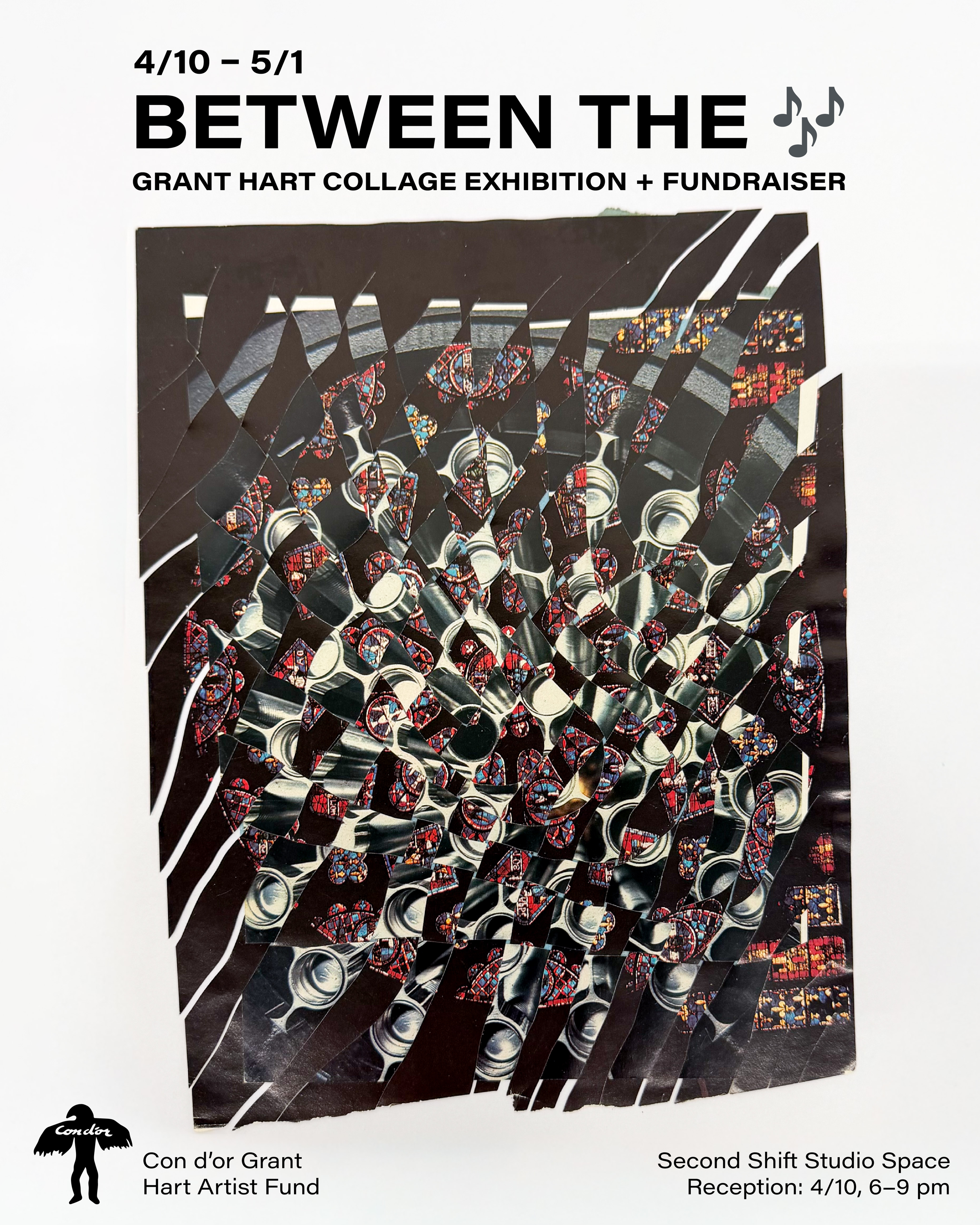
Grant Hart (1961–2017) was a Saint Paul–based musician and lifelong resident, best known as the co-founder, co-songwriter, and drummer of the influential punk and alternative rock band Hüsker Dü, which achieved international recognition in the 1980s. Alongside his groundbreaking musical career, Hart was also a prolific and deeply committed visual artist, producing more than 400 collage works throughout his life.
Working primarily with colorful vintage magazines, Hart developed a distinct, surrealist-inspired technique. He would cut and interweave two separate images, blending them into a single composition that creates a striking collision of subject matter. The resulting works are intricate, unexpected, and richly layered, reflecting both experimentation and intuition.
Before his passing, Hart expressed a strong desire to support local artists, with a particular emphasis on women artists. This vision led to the creation of the Con d’or Grant Hart Artist Fund, which has supported artists at Second Shift Studio Space since its founding through direct stipends.
This exhibition brings together a large selection of Hart’s collages, all which will be available for purchase, with proceeds supporting Second Shift’s ongoing mission to provide free studio space, exhibitions, and resources for women and gender non-conforming artists.
Caring Nature Study Group: Session 5
Caring Nature
Join current Resident Artist Prima Jalichandra-Sakuntabhai for a study group on community care and nature stewardship in anarchist practices
Session 5: April 8
In "From Identifying with, Towards Belonging To. Individualism vs Collectivism", Gabriel Blanco-Ruiz invites us to collectively investigate and dream around understandings of belonging, exploring how we belong to a complex and expansive system of relationships and natural processes, and have obligation and duty towards other beings, the same way we are held by them, just by the fact of being born. We will be reading excerpts from Sand Talk: How Indigenous Thinking Can Save the World by Tyson Yunkaporta. As additional material, you can also take a listen to the podcast, On Singing to the Beloved in Times of Crisis.
Please mask upon entry to the space. We will decide as a group whether or not we will keep masks on during the session. Masks are provided.
About Caring Nature
What is the value of human life outside wage/labor and consumerism? How do we sustain ourselves and our community without being extractive and destructive to the environment? How do we learn to organize collectively, socially and politically in relation to Nature?
In Peter Kropotkin’s book, Mutual Aid (1902), the Russian anarchist posits that cooperation, not competition, is at the base of natural evolution, both in animal and human groups. He traced the evolution of voluntary cooperation from the tribe, peasant village, and medieval commune to a variety of modern associations—trade unions, learned societies, the Red Cross—that have continued to practice mutual support despite the rise of the coercive bureaucratic state. The trend of modern history, he believed, was pointing back toward decentralized, nonpolitical, cooperative societies in which people could develop their creative faculties without interference from the governing bodies.
A modern example is the ZAD, the French rural militant occupation and autonomous zone, which successfully halted the construction of an international airport. In We Are 'Nature' Defending Itself. Entangling Art, Activism and Autonomous Zones by Isabelle Fremeaux and Jay Jordan, the preservation of swamp lands by communal occupation becomes a radical political action against climate disaster and extractive capitalism. Finding one’s place as stewards for Nature is to regenerate abundance. Utopia is not a future we are patiently waiting for but can be implemented in our current times.
As access to Nature, from the food we consume to the environment in which we live, becomes more and more limited, subjected under the same rule of scarcity and hoarding tendencies as commodities, we have lost agency as human individuals to choose how we want to live and exchange without depending on the monopoly of capitalism. What are local and personal initiatives in the Twin Cities that take away the main supports of economic life from corporate interests and return them to the community? What can we learn from the intersections of food justice, climate justice, housing rights and indigenous rights to free ourselves from the demands of capitalism and fears of scarcity? How can we, instead, enrich our lives with generosity and care?
Event Structure
Hosted at Second Shift Studio, the study group is a self-organizing entity, primarily facilitated by Resident Artist Prima Jalichandra-Sakuntabhai. As the group evolves, each participant is encouraged to offer ideas and facilitate a future session. This is a co-learning space in which we each contribute our own sources of knowledge and experiences. Guest speakers, local organizers, and activists are invited to present their work and further our discussions, grounding them in the concrete possibilities of anarchism.
The study group is framed by the concept of the potluck/potlatch and how we want to define acts of mutual generosity and gift-giving. The first session will be focused on studying examples of potluck/potlatch and starting to define our own rules. The last session will be a celebratory potluck/potlatch banquet, as a culmination of what we’ve learned and desired together throughout the different sessions.
Caring Nature Study Group: Session 4
Caring Nature
Join current Resident Artist Prima Jalichandra-Sakuntabhai for a study group on community care and nature stewardship in anarchist practices
Session 4: March 18
The Future as Artistic Practice. Ritual, Magic and Art Organizing in Times of Collapse: Join us for a discussion of We Are Nature Defending Itself by Isabelle Fremeaux and Jay Jordan, followed by a conversation with members of Spill Paint Not Oil, a local arts and organizing collective. The book blends the authors' personal narrative as artists and activists and explores how activism, and daily life merge in creating autonomous spaces, such as the ZAD (Zone to Defend) in France, a site of radical occupation and resistance against an airport project. The ZAD is an example of a successful struggle where transformative, place-based resistance intertwines with ecological and social concerns. For the session, we will be focusing on Part I Seeding- the Extermination Machine (pages 28-70). The reading is shared on the Google Folder once you register for the event!
Reading:
We Are 'Nature' Defending Itself. Entangling Art, Activism and Autonomous Zones by Isabelle Fremeaux and Jay Jordan
Activity:
Reading Discussion and Presentation by Spill Paint Not Oil
Please mask upon entry to the space. We will decide as a group whether or not we will keep masks on during the session. Masks are provided.
About Caring Nature
What is the value of human life outside wage/labor and consumerism? How do we sustain ourselves and our community without being extractive and destructive to the environment? How do we learn to organize collectively, socially and politically in relation to Nature?
In Peter Kropotkin’s book, Mutual Aid (1902), the Russian anarchist posits that cooperation, not competition, is at the base of natural evolution, both in animal and human groups. He traced the evolution of voluntary cooperation from the tribe, peasant village, and medieval commune to a variety of modern associations—trade unions, learned societies, the Red Cross—that have continued to practice mutual support despite the rise of the coercive bureaucratic state. The trend of modern history, he believed, was pointing back toward decentralized, nonpolitical, cooperative societies in which people could develop their creative faculties without interference from the governing bodies.
A modern example is the ZAD, the French rural militant occupation and autonomous zone, which successfully halted the construction of an international airport. In We Are 'Nature' Defending Itself. Entangling Art, Activism and Autonomous Zones by Isabelle Fremeaux and Jay Jordan, the preservation of swamp lands by communal occupation becomes a radical political action against climate disaster and extractive capitalism. Finding one’s place as stewards for Nature is to regenerate abundance. Utopia is not a future we are patiently waiting for but can be implemented in our current times.
As access to Nature, from the food we consume to the environment in which we live, becomes more and more limited, subjected under the same rule of scarcity and hoarding tendencies as commodities, we have lost agency as human individuals to choose how we want to live and exchange without depending on the monopoly of capitalism. What are local and personal initiatives in the Twin Cities that take away the main supports of economic life from corporate interests and return them to the community? What can we learn from the intersections of food justice, climate justice, housing rights and indigenous rights to free ourselves from the demands of capitalism and fears of scarcity? How can we, instead, enrich our lives with generosity and care?
Event Structure
Hosted at Second Shift Studio, the study group is a self-organizing entity, primarily facilitated by Resident Artist Prima Jalichandra-Sakuntabhai. As the group evolves, each participant is encouraged to offer ideas and facilitate a future session. This is a co-learning space in which we each contribute our own sources of knowledge and experiences. Guest speakers, local organizers, and activists are invited to present their work and further our discussions, grounding them in the concrete possibilities of anarchism.
The study group is framed by the concept of the potluck/potlatch and how we want to define acts of mutual generosity and gift-giving. The first session will be focused on studying examples of potluck/potlatch and starting to define our own rules. The last session will be a celebratory potluck/potlatch banquet, as a culmination of what we’ve learned and desired together throughout the different sessions.
TO TEND TO: Bo Young An
Join us for TO TEND TO, a solo exhibition by featured artist Bo Young An!
Opening Reception: March 13, 6-9 pm
Art Soup: April 2, 6 pm
Gallery Hours: Saturdays and Sundays, 12-4 pm or by appointment
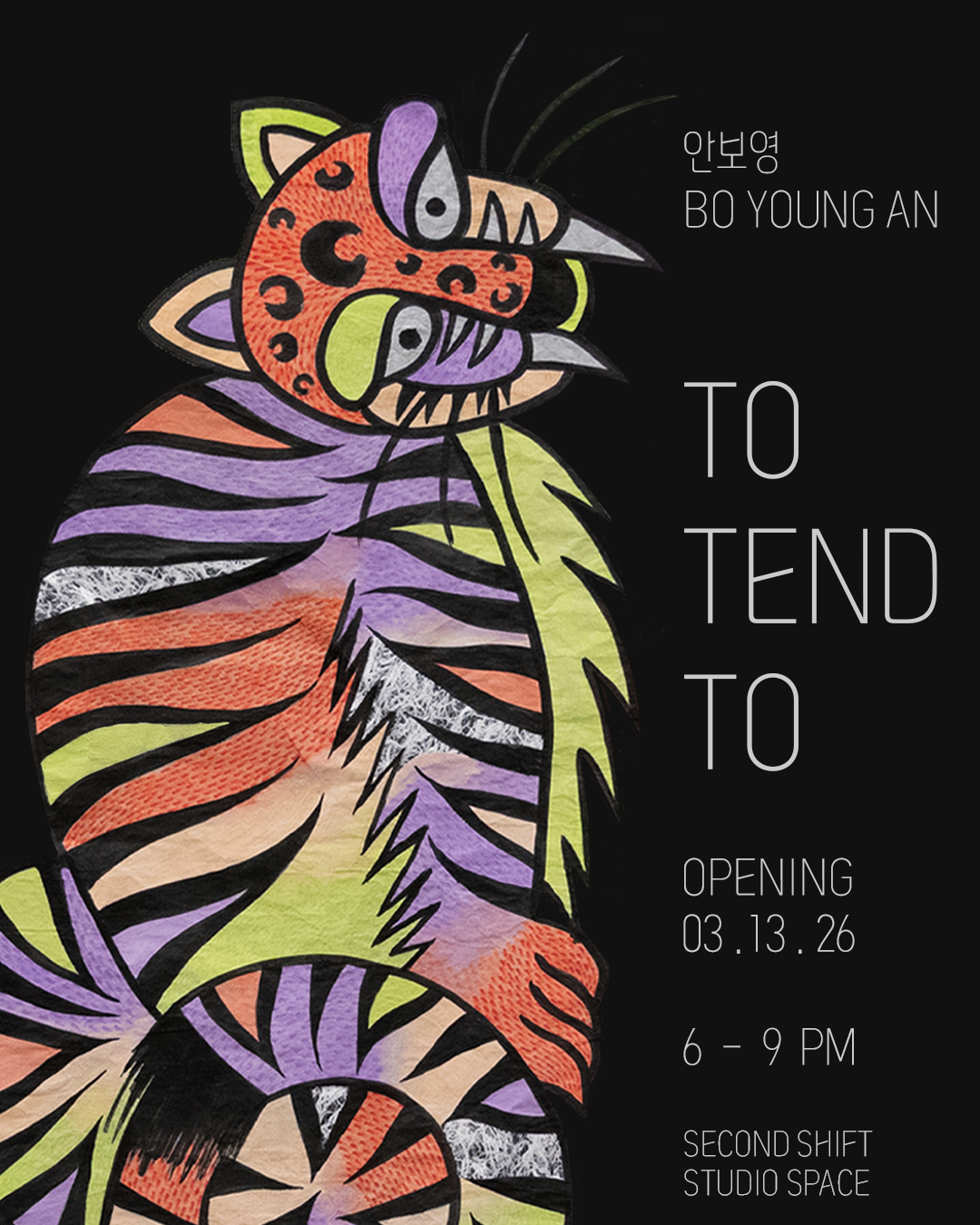
To Tend To emerges from an accumulation of gestures through which the mind and body found stability within the vast movements that shapes a lived life. Asymmetrical symmetry of talismanic objects made by slow repetition, the measured pace of the hands works towards a state of balance.
Each tiger on the 8 talismans are loosely traced from the previous, forming a continuous lineage of guardians moving in the same direction. The cultural symbols that ward off misfortune are suspended within the jogakbo backgrounds. Korea’s geometric patchwork tradition of assembling fragments of what is available into something whole is shaped by necessity and preservation. The labour of making what holds the precious is carried forward.
The surface holds evidence of time and the hand at work. The Hanji that has traveled back and forth from the artists’ home of Korea and Thailand endures repeated handling and restructuring. The materials in the space withstands being subjected to continual transformation. The hanji yields and softens, losing stiffness and pristine but gaining malleability, a paradoxical strength reflected on the marred surface that mirrors the tenacity required through lived experiences.
Vessels gathered are a nod to Joseon moon jars, privileging weight and touch over uniformity. Clay responds to the state of the body that shapes it. The purpose is balance, not perfection, achieved during the throwing process. Whether the object feels resolved is defined how it settles convincingly in the hands. Symmetry offers orientation and variation resists rigidity.
Emerging from a life lived across multiple states, the work moves through layered inheritances. Forms are carried forward, adjusted through practice, and made present through the body.
Across the exhibition, tending becomes a continuous act, the method. Attention functions as care and meditation, as a way of reassembling the self before extending outward. What is mended internally shapes the reach beyond the self.
About the Artist
Bo Young An is a Korean-born, Thailand-raised, third-culture artist whose ritualistic practices moves through layered inheritances shaped by migration and adaptation. Grounded in an interdisciplinary approach as she explores how memory, cultural continuation, and daily gestures of making become sites of stability within transience.
Her work considers the tension between nostalgia and progress, how tradition and culture is carried forward, adjusted, and made present through the body. Personal and collective memory anchors her work as her materials hold evidence of honoring tradition and carrying it forward. She examines how these themes play out on a personal scale, often drawing from her experience as a third-culture individual to reflect on how cultural hybridity shapes belonging and transformation as she leans into art’s capacity to hold space for contradictions and complexity.
She received her B.A. in Interdisciplinary Visual Arts from the University of Washington, Seattle, and her MFA from the Minneapolis College of Art and Design in 2022. Her work has been exhibited internationally in spaces in Korea, France, Spain, and the United States.
Art Soup: HIEROGLYPHICS
Join us for our next Art Soup on Sunday, March 1, 1 pm! We will discuss HIEROGLYPHICS, a solo exhibition by current Resident Artist Prima Jalichandra-Sakuntabhai.
Art Soup is a regular program that gathers the community around soup and art. Join us for a casual meal and conversation about our current exhibition.
About HIEROGLYPHICS
Hieroglyphics is a collection of objects and gestures that arise where language fails. In analyzing Walt Whitman’s use of the poetic image of blades of grass, Lewis Hyde describes how “Natural objects - living things in particular - are a language we only faintly remember. It is as if creation had been dismembered sometime in the past and all things are limbs we have lost that will make us whole if only we can recall them. Whitman’s sympathetic perception of objects is a remembrance of the wholeness of things.” (“A Draft of Whitman” p174, The Gift, Lewis Hyde, 1999)
Upon learning about the passing of a friend from my adolescence in France, I find myself mute in the face of loss. I was reminded of a story I read, about Emperor Hadrian’s irreconcilable grief over the passing of his young lover, Antinous who drowned himself in the Nile as a sacrifice for his love. The emperor erected a city in his name and created a cult of worship. Countless representations of the youth took shape in marble, stone, coins and reliefs.
In my own attempt at grasping at my friend’s life, I incised onto glass, my collection of sites, strings of phrases and mythical references. They stand for the many moments across time and geographies that could hint at the mystery of his destiny. He is the Unknown Soldier for whom an eternal flame is lit under the Arch of Triumph on the Champs Elysees. He is Antinous, reborn as Osiris, God of the After Life. His anonymity grants him the eternity of the gods.
Paris is the city of our youth, which we crafted in our own image. Without him, the once ideal city closes itself and ceases to be a place I can return to. The emperor’s incessant journeys are fueled by the desire for wholeness.
HIEROGLYPHICS: Prima Jalichandra-Sakuntabhai
Join us for HIEROGLYPHICS, a solo exhibition by current Resident Artist Prima Jalichandra-Sakuntabhai!
Opening Reception: February 18, 6-8 pm
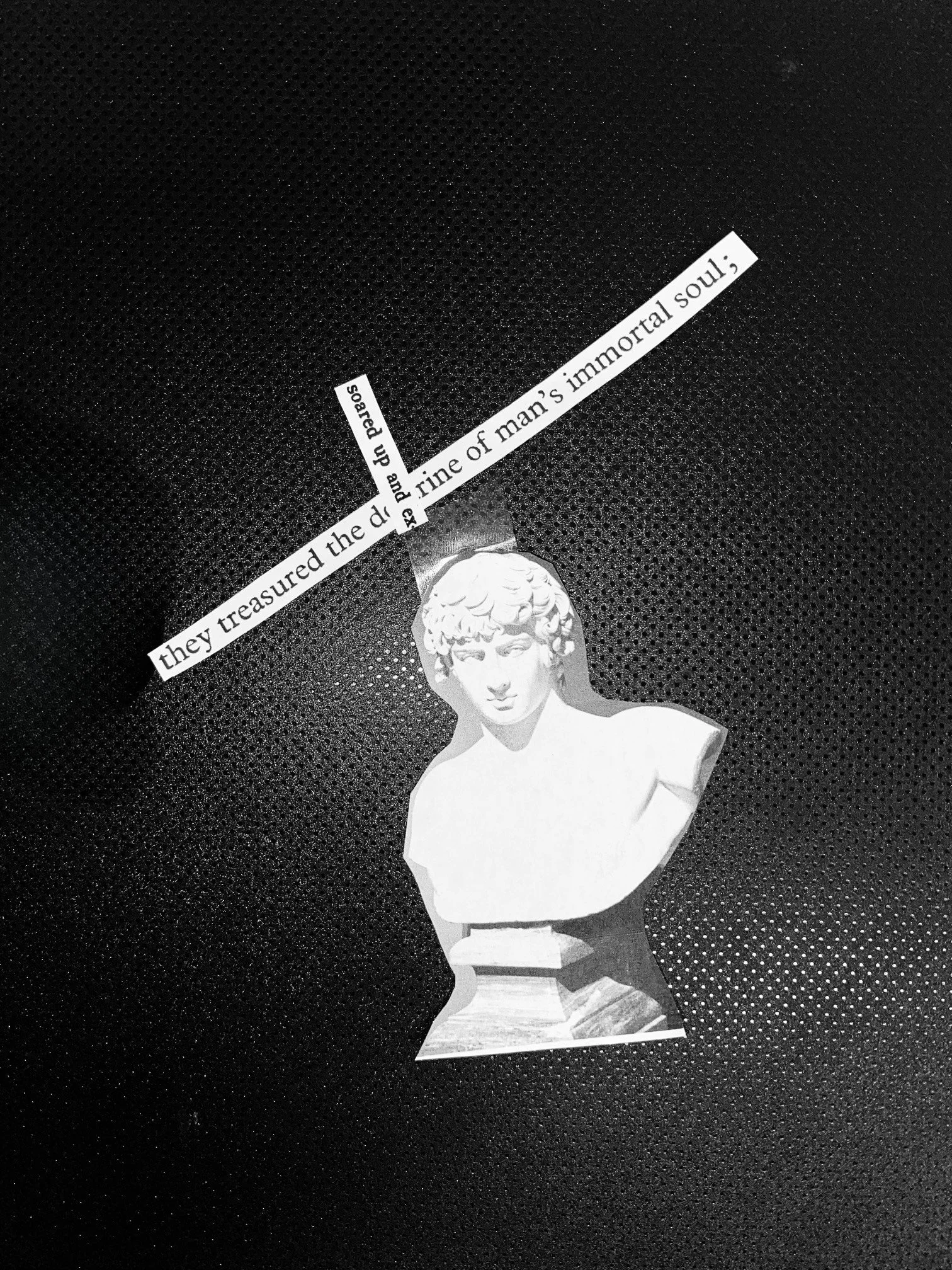
Hieroglyphics is a collection of objects and gestures that arise where language fails. In analyzing Walt Whitman’s use of the poetic image of blades of grass, Lewis Hyde describes how “Natural objects - living things in particular - are a language we only faintly remember. It is as if creation had been dismembered sometime in the past and all things are limbs we have lost that will make us whole if only we can recall them. Whitman’s sympathetic perception of objects is a remembrance of the wholeness of things.” (“A Draft of Whitman” p174, The Gift, Lewis Hyde, 1999)
Upon learning about the passing of a friend from my adolescence in France, I find myself mute in the face of loss. I was reminded of a story I read, about Emperor Hadrian’s irreconcilable grief over the passing of his young lover, Antinous who drowned himself in the Nile as a sacrifice for his love. The emperor erected a city in his name and created a cult of worship. Countless representations of the youth took shape in marble, stone, coins and reliefs.
In my own attempt at grasping at my friend’s life, I incised onto glass, my collection of sites, strings of phrases and mythical references. They stand for the many moments across time and geographies that could hint at the mystery of his destiny. He is the Unknown Soldier for whom an eternal flame is lit under the Arch of Triumph on the Champs Elysees. He is Antinous, reborn as Osiris, God of the After Life. His anonymity grants him the eternity of the gods.
Paris is the city of our youth, which we crafted in our own image. Without him, the once ideal city closes itself and ceases to be a place I can return to. The emperor’s incessant journeys are fueled by the desire for wholeness.
POSTPONED: Caring Nature Study Group: Session 3
Caring Nature
The February session of Caring Nature has been postponed to focus our efforts on supporting the East St Paul community being impacted by current immigration raids.
The presentation with Spill Paint Not Oil is postponed until the March 18 session.
FEAST DAY: Alanna Stapleton
Join us for FEAST DAY, a solo exhibition by featured artist Alanna Stapleton.
January 16–February 6, 2026
Reception
January 31, 6-8 pm
Gallery Hours
Sunday, January 25, 12-3pm
Saturday, January 31, 12-3pm
Sunday, February 1, 12-3pm
or by appointment
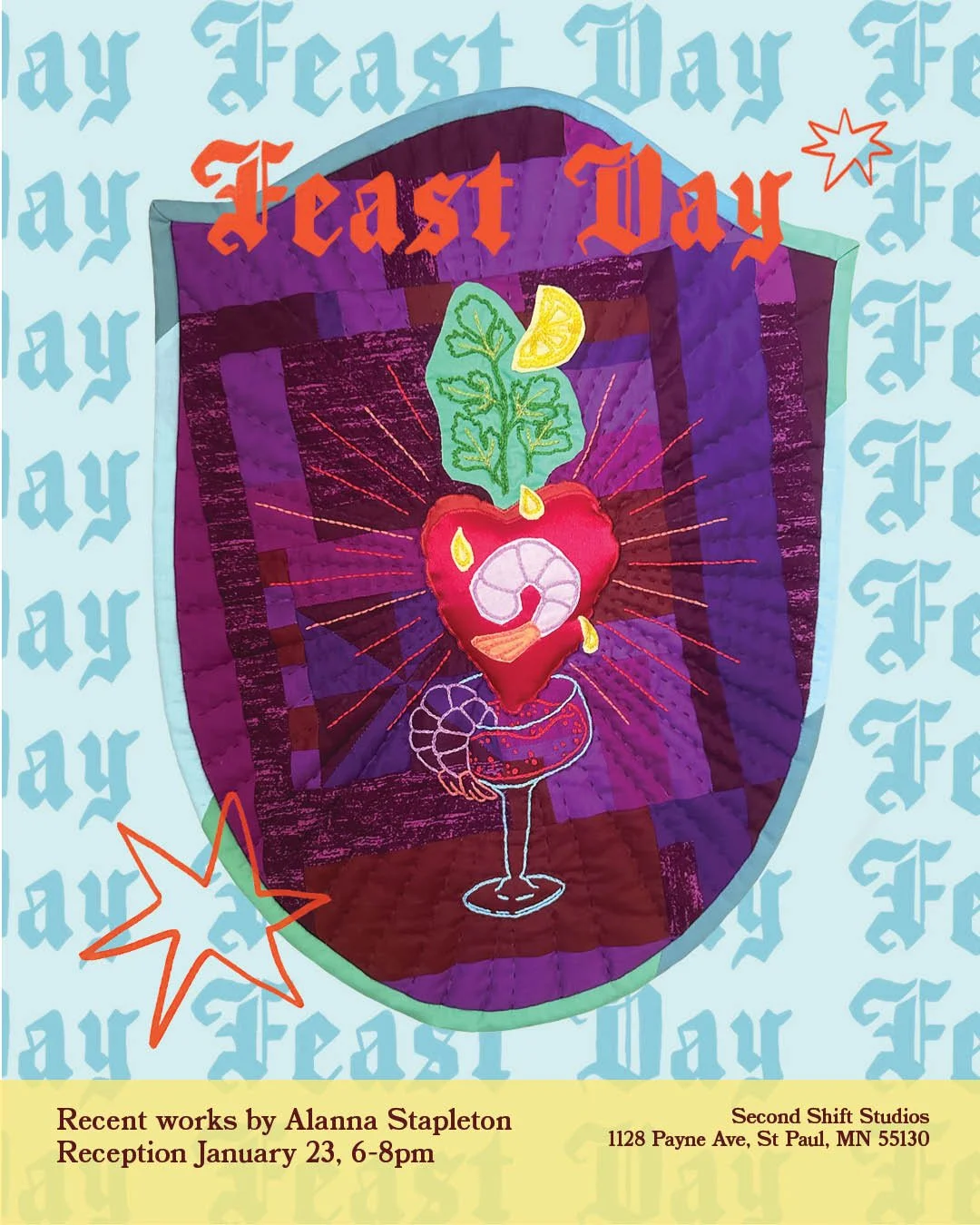
FEAST DAY is a selection of recent quilted works by Alanna Stapleton exploring a search for meaning through grief and shifting identities, queering symbols and traditions of girlhood, food, faith, and family with humor and a midwestern sensibility.
Caring Nature Study Group: Session 2
Caring Nature
Join current Resident Artist Prima Jalichandra-Sakuntabhai for a study group on community care and nature stewardship in anarchist practices
Session 2: January 7
Reading:
We are HERE, now. Chipping away, excerpts compiled by Colin Anderson from Open Market
Activity:
What does food justice look like in practice? How is it sustainable?
Presentation from Open Market
Please mask upon entry to the space. We will decide as a group whether or not we will keep masks on during the session. Masks are provided.
About Caring Nature
What is the value of human life outside wage/labor and consumerism? How do we sustain ourselves and our community without being extractive and destructive to the environment? How do we learn to organize collectively, socially and politically in relation to Nature?
In Peter Kropotkin’s book, Mutual Aid (1902), the Russian anarchist posits that cooperation, not competition, is at the base of natural evolution, both in animal and human groups. He traced the evolution of voluntary cooperation from the tribe, peasant village, and medieval commune to a variety of modern associations—trade unions, learned societies, the Red Cross—that have continued to practice mutual support despite the rise of the coercive bureaucratic state. The trend of modern history, he believed, was pointing back toward decentralized, nonpolitical, cooperative societies in which people could develop their creative faculties without interference from the governing bodies.
A modern example is the ZAD, the French rural militant occupation and autonomous zone, which successfully halted the construction of an international airport. In We Are 'Nature' Defending Itself. Entangling Art, Activism and Autonomous Zones by Isabelle Fremeaux and Jay Jordan, the preservation of swamp lands by communal occupation becomes a radical political action against climate disaster and extractive capitalism. Finding one’s place as stewards for Nature is to regenerate abundance. Utopia is not a future we are patiently waiting for but can be implemented in our current times.
As access to Nature, from the food we consume to the environment in which we live, becomes more and more limited, subjected under the same rule of scarcity and hoarding tendencies as commodities, we have lost agency as human individuals to choose how we want to live and exchange without depending on the monopoly of capitalism. What are local and personal initiatives in the Twin Cities that take away the main supports of economic life from corporate interests and return them to the community? What can we learn from the intersections of food justice, climate justice, housing rights and indigenous rights to free ourselves from the demands of capitalism and fears of scarcity? How can we, instead, enrich our lives with generosity and care?
Event Structure
Hosted at Second Shift Studio, the study group is a self-organizing entity, primarily facilitated by Resident Artist Prima Jalichandra-Sakuntabhai. As the group evolves, each participant is encouraged to offer ideas and facilitate a future session. This is a co-learning space in which we each contribute our own sources of knowledge and experiences. Guest speakers, local organizers, and activists are invited to present their work and further our discussions, grounding them in the concrete possibilities of anarchism.
The study group is framed by the concept of the potluck/potlatch and how we want to define acts of mutual generosity and gift-giving. The first session will be focused on studying examples of potluck/potlatch and starting to define our own rules. The last session will be a celebratory potluck/potlatch banquet, as a culmination of what we’ve learned and desired together throughout the different sessions.
Sense It: An immersive humming and sand-drawing gathering
On December 13, 4-5:30 pm, you are invited to join Ritika Ganguly and Sofia Padilla in a sensorially immersive space to gather around the simple act of humming with our voices and drawing with sand. Together, we will create a profound sense of presence, pulling each other fully into an environment designed around humming in harmony and making patterns in the sand (on an overhead projector). These patterns are meant to align with participants' experiences of humming.
No prior singing or drawing experience is required! The workshops are trilingual (Hindi, English, Spanish), and free!
This activity is made possible by the voters of Minnesota through grants from the Minnesota State Arts Board, thanks to a legislative appropriation from the arts and cultural heritage fund.
Caring Nature Study Group: Session 1
Caring Nature
Join current Resident Artist Prima Jalichandra-Sakuntabhai for a study group on community care and nature stewardship in anarchist practices
Session 1: December 10
Reading:
The Gift, Chapters 1 & 2, Lewis Hyde
“An Immediatist Potlatch”, Hakim Bey in Immediatism
Activity:
Introduction with creating a list of questions and interests under the theme
Organizing a potluck that would meet the precepts of the Gift and immediatism. What rules/ways to organize/questions do we want to bring to the “banquet”? How do we want to define gift-giving and generosity?
About Caring Nature
What is the value of human life outside wage/labor and consumerism? How do we sustain ourselves and our community without being extractive and destructive to the environment? How do we learn to organize collectively, socially and politically in relation to Nature?
In Peter Kropotkin’s book, Mutual Aid (1902), the Russian anarchist posits that cooperation, not competition, is at the base of natural evolution, both in animal and human groups. He traced the evolution of voluntary cooperation from the tribe, peasant village, and medieval commune to a variety of modern associations—trade unions, learned societies, the Red Cross—that have continued to practice mutual support despite the rise of the coercive bureaucratic state. The trend of modern history, he believed, was pointing back toward decentralized, nonpolitical, cooperative societies in which people could develop their creative faculties without interference from the governing bodies.
A modern example is the ZAD, the French rural militant occupation and autonomous zone, which successfully halted the construction of an international airport. In We Are 'Nature' Defending Itself. Entangling Art, Activism and Autonomous Zones by Isabelle Fremeaux and Jay Jordan, the preservation of swamp lands by communal occupation becomes a radical political action against climate disaster and extractive capitalism. Finding one’s place as stewards for Nature is to regenerate abundance. Utopia is not a future we are patiently waiting for but can be implemented in our current times.
As access to Nature, from the food we consume to the environment in which we live, becomes more and more limited, subjected under the same rule of scarcity and hoarding tendencies as commodities, we have lost agency as human individuals to choose how we want to live and exchange without depending on the monopoly of capitalism. What are local and personal initiatives in the Twin Cities that take away the main supports of economic life from corporate interests and return them to the community? What can we learn from the intersections of food justice, climate justice, housing rights and indigenous rights to free ourselves from the demands of capitalism and fears of scarcity? How can we, instead, enrich our lives with generosity and care?
Event Structure
Hosted at Second Shift Studio, the study group is a self-organizing entity, primarily facilitated by Resident Artist Prima Jalichandra-Sakuntabhai. As the group evolves, each participant is encouraged to offer ideas and facilitate a future session. This is a co-learning space in which we each contribute our own sources of knowledge and experiences. Guest speakers, local organizers, and activists are invited to present their work and further our discussions, grounding them in the concrete possibilities of anarchism.
The study group is framed by the concept of the potluck/potlatch and how we want to define acts of mutual generosity and gift-giving. The first session will be focused on studying examples of potluck/potlatch and starting to define our own rules. The last session will be a celebratory potluck/potlatch banquet, as a culmination of what we’ve learned and desired together throughout the different sessions.
ART SOUP: Quiet Resilience
Join us for ART SOUP on December 4, 6–8 pm! We’ll discuss our current exhibition, Quiet Resilience, a solo show by Mary Jane Mansfield.
Art Soup is a regular program that gathers the community around soup and art. Join us for a casual meal and conversation about our current exhibition.
About Quiet Resilience
Mary Jane Mansfield’s solo exhibition features a lyrical collection of electric water sculpture, painting, drawing, and projection created and curated around the idea of resilience.
The metaphor of being lost at sea comes into play, setting the stage for an ocean of sorrow too vast to navigate. The imagery, both abstract and literal, that has emerged from it taps into a deeply emotional space occupied by the struggles one faces when processing profound grief. Confronting powerful, unpredictable forces and the unexpected ways the universe is here to carry us through emerges, pointing to the source of energy that fuels resilience.
—
Mary Jane Mansfield is a fiscal year 2025 recipient of a Creative Individuals grant from the Minnesota State Arts Board. This activity is made possible by the voters of Minnesota through a grant from the Minnesota State Arts Board, thanks to a legislative appropriation from the arts and cultural heritage fund.
Quiet Resilience: Mary Jane Mansfield
Second Shift Studio presents QUIET RESILIENCE, an immersive solo exhibition by former Resident Artist Mary Jane Mansfield.
Opening Reception: November 7, 6–8 pm
Gallery hours: Saturdays 10–2 & Sundays 11–2
Art Soup, Community Conversation on Resilience: December 4, 6–8 pm

Mary Jane Mansfield’s solo exhibition features a lyrical collection of electric water sculpture, painting, drawing, and projection created and curated around the idea of resilience.
The metaphor of being lost at sea comes into play, setting the stage for an ocean of sorrow too vast to navigate. The imagery, both abstract and literal, that has emerged from it taps into a deeply emotional space occupied by the struggles one faces when processing profound grief. Confronting powerful, unpredictable forces and the unexpected ways the universe is here to carry us through emerges, pointing to the source of energy that fuels resilience.
—
Mary Jane Mansfield is a fiscal year 2025 recipient of a Creative Individuals grant from the Minnesota State Arts Board. This activity is made possible by the voters of Minnesota through a grant from the Minnesota State Arts Board, thanks to a legislative appropriation from the arts and cultural heritage fund.


PRETTY HOT: Alondra M. Garza
Join us for PRETTY HOT, a solo exhibition by Alondra M. Garza!
Opening Reception: October 4, 6-8 PM
ART SOUP: October 11, 4-6 pm
Viewing hours: Saturday and Sunday, 12-3 pm, or by appointment.

Alondra M. Garza’s solo exhibition explores the complexities of Latina identity through symbolically charged mixed media paintings, performance photography, and installation. Through humor, sensuality, Latin culture, and femme bodies, Garza transforms stereotypes and narratives into sensory-driven acts of empowerment and vulnerability. Pretty Hot includes expressive oil and Cheeto dust paintings, watercolors created while caregiving, photographs reclaiming the “Hot Cheeto Girl”, and fiery installations. They are spicy, made to stain, and more than a snack.
Alondra's work is currently being showcased:
White Bear Center for the Arts for her co-curated exhibition"Futuros Posibles", on view from September 11 to October 31.
Northeast Sculpture, "Pasos Prohibidos", on view from September 17 to October 4.
She is also the juror of a show opening at Silverwood Park, "The Value of Nature", from October 9 to November 30.
ART SOUP: New Resident Open House
Join us for an ART SOUP to celebrate the New Resident Open House on September 23, 6–8 pm.
The Open House shares the work of our new 2025-26 Resident Artists: Delaney Keshena, Ella Leidy, Meher Khan, and Prima Jalichandra-Sakuntabhai.
Art Soup is a regular program that gathers the community around soup and art. Join us for a casual meal and conversation about our current exhibition.
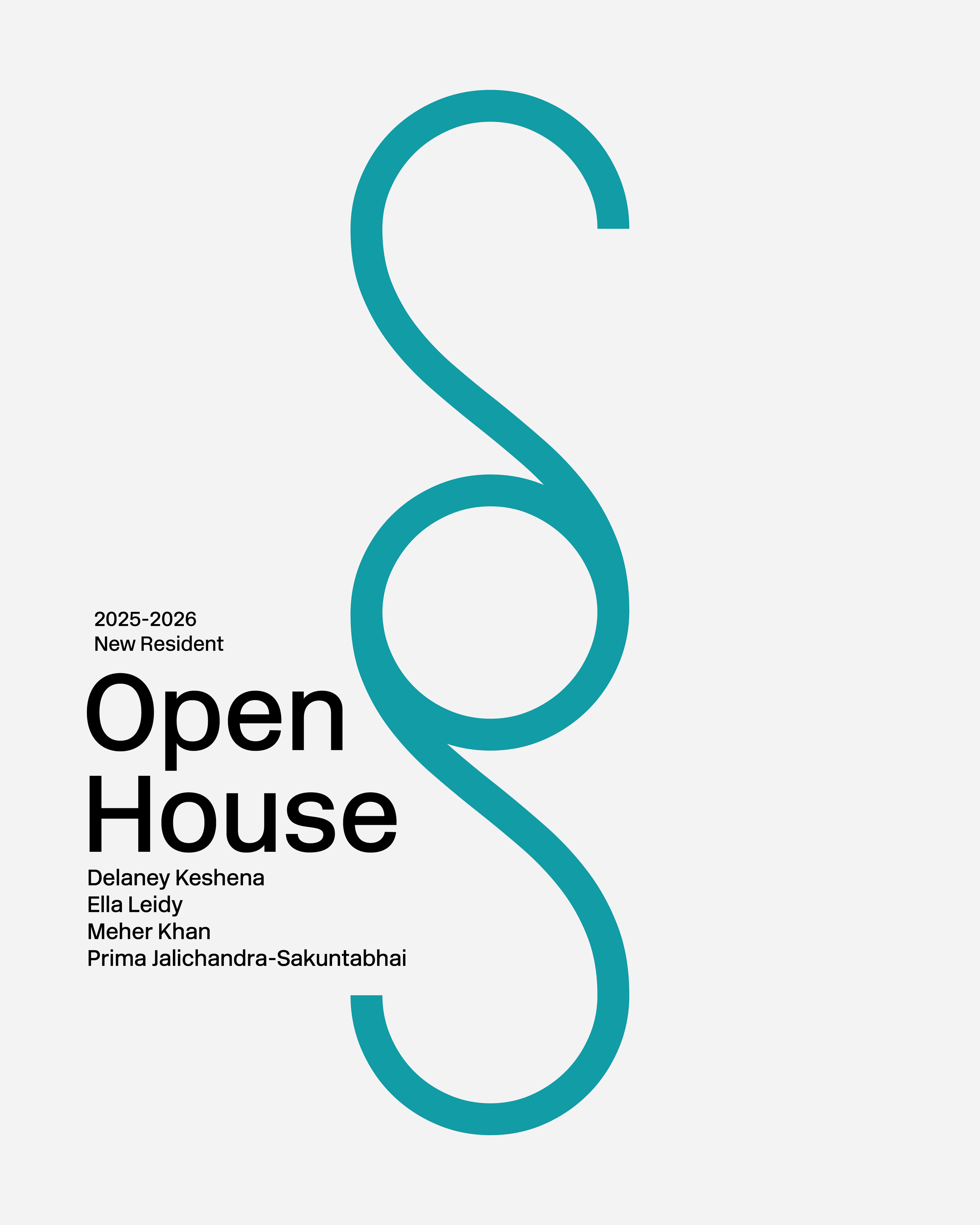
New Resident Open House
Join us for our 2025-26 New Resident Open House! The closing reception will be held on September 20, 6–8 pm.
The Open House is an opportunity to meet our new 2025-26 Resident Artists: Delaney Keshena, Ella Leidy, Meher Khan, and Prima Jalichandra-Sakuntabhai.

2024-25 Resident Artist Closing Exhibition
Join us for a closing exhibition with our 2024-25 Resident Artists on July 11, 6-8 pm!
The exhibition will feature the work of our 2024-25 Resident Artists, Alondra M. Garza, Tamara Aupaumut, Vernon Vanderwood, and Yasmin Yassin. This exhibition is the culmination of their year-long residency at Second Shift Studio.

Art Soup: GUT FEELING
Join us for our next Art Soup on June 16 at 6 pm! We will be celebrating Resident Artist Vernon Vanderwood's solo exhibition, GUT FEELING.
About GUT FEELING
GUT FEELING shares the experimentation and development of vernon’s practice with SCOBY as a material. Drawings, sculptures, and laser etchings begin to build a world around this material and expanded process. This show is a reflection of what they've been working on this past year, one year beyond school and at Second Shift Studio. The work is self-reflective but fractals outwords into both micro and macro reflections of body, identity, and place.
About Art Soup
Art Soup is a regular program that gathers the community around soup and art. Join us for a casual meal and conversation about our current exhibition.
GUT FEELING
Join us for Resident Artist Vernon Vanderwood's emerging solo show at Second Shift, opening on May 29, 6-9 pm.
GUT FEELING shares the experimentation and development of vernon’s practice with SCOBY as a material. Drawings, sculptures, and laser etchings begin to build a world around this material and expanded process. This show is a reflection of what they've been working on this past year, one year beyond school and at Second Shift Studio. The work is self-reflective but fractals outwords into both micro and macro reflections of body, identity, and place.
Additional Gallery Hours:
June 13, 3-6 pm
June 14, 11 am-4 pm: Studio Move-Out Sale
June 16, 6 pm: Art Soup
June 20, 3-6 pm
June 21, 10 am-4 pm: Draw with me/Closing Day

Paper + Prints + Parts
Join us for the opening of current Resident Artist Tamara Aupaumut’s solo exhibition on Friday, May 2, 6–9 pm.
Paper + Prints + Parts explores dreams, memory, transformation, space and time. The pieces speak to the power of the Earth and the cosmos as keepers and carriers of time, memories, and knowledge.
Opening Reception: Friday, May 2, 6-9 pm
& as part of the Saint Paul Art Crawl on Saturday, May 3, 12-8 pm
Additional gallery hours:
Saturday, May 10, 12–4 pm
Friday, May 16, 1–6 pm
Sunday, May 25, 1–6 pm
Art Soup: Plasmic
Join us for our next Art Soup on April 19 at 4 pm! We will be celebrating the closing of our latest exhibition, Plasmic. Please RSVP at the link below as space is limited.
About Plasmic
Plasmic, inspired by plasma, the fluid barrier found in a cell, is about interfacing, a permeable relationship with “other.” The tension of having a body, of crossing barriers, of existing in a system. This show brings together a community of bio-curious artists but through each of their explorations these bodily (human and nonhuman) mediums cultivate relationships with beings outside of ourselves. Community, the body, and ecosystem at the center of these eclectic works and this show is a space to explore fluid intersectionality.
About Art Soup
Art Soup is a regular program that gathers the community around soup and art. Join us for a casual meal and conversation about our current exhibition.
Plasmic: Bio-Art Exhibition
Join us for Plasmic, a bio-art exhibition curated by current Resident Artist Vernon Vanderwood.
PLASMIC Open Gallery Hours
Saturday, March 29: 10 AM - 1 PM
Saturday, April 5: 10 AM - 1 PM
Saturday, April 12: 10 AM - 1 PM
Art Soup: Saturday, April 19, 4 PM

Plasmic, inspired by plasma, the fluid barrier found in a cell, is about interfacing, a permeable relationship with “other.” The tension of having a body, of crossing barriers, of existing in a system. This show brings together a community of bio-curious artists but through each of their explorations these bodily (human and nonhuman) mediums cultivate relationships with beings outside of ourselves. Community, the body, and ecosystem at the center of these eclectic works and this show is a space to explore fluid intersectionality.
New Applicant Open House
Join us for an open house on February 12, 6–8 pm!
If you are applying to this year’s Artist Residency, we invite you to visit our space, meet the current Resident Artists, and ask any questions you might have. This will be an informal evening with room for conversation — we encourage you to stop by!
Friends Forever Art Market
Join us for an Art Market on February 8, 1–5 pm! This market is organized by current Resident Artist Tamara Aupaumut.
