
Con D'or Grant Hart Artist Fund
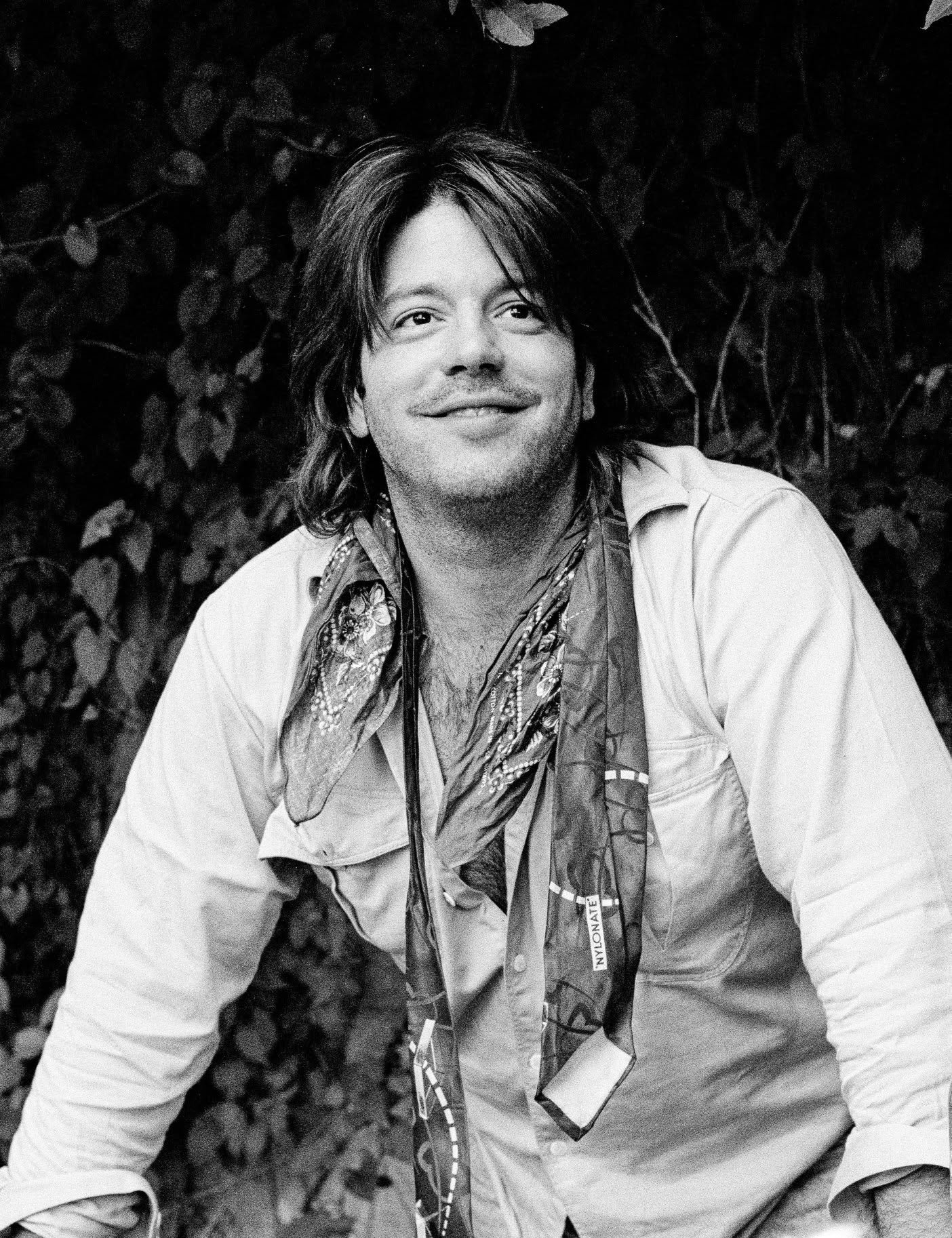
The Con D’or Grant Hart Artist Fund has been an integral support that has sustained Second Shift Studio Space since our beginning.
Grant Hart, who passed away in 2017, was a talented musician, artist and lifelong resident of Saint Paul. One of his wishes was to support women’s contributions to the arts. Before his passing, Hart expressed a strong desire to support local artists, with a particular emphasis on women artists. This vision led to the creation of the Con D’or Grant Hart Artist Fund, which has supported artists at Second Shift Studio Space since its founding through direct stipends.
Throughout Second Shift’s years, the Con D’or Artist Fund has provided stipends to resident artists. We are very grateful to Hart and his family for their support of our program.
Learn more about Grant Hart’s recent collage exhibition here.
Grant Hart (1961–2017) is widely known as a pioneering and influential musician, but that framing flattens the full scope of his practice. A lifelong resident of Saint Paul, he was best known as the co-founder, co-songwriter, and drummer for the influential hardcore punk and alternative rock band Hüsker Dü, which achieved international recognition in the 1980s. In parallel with his music, Hart was a prolific and gifted visual artist.
Collage was not a side project or something he dabbled in. It was a sustained, rigorous commitment that ran alongside his music for years. From the archive, we organized nearly 400 individual collages, pointing to an artist who returned to the form again and again, not out of habit, but out of necessity. This was a daily or near-daily practice.
Working primarily from vintage magazines, Hart developed a distinctive process of cutting, weaving, and assembling images, folding them into unexpected visual relationships. The work tracks a mind in motion, pulling from wide-ranging interests in history, technology, outer space, geography, and popular culture.
“I’d say my work is centered on collage at the moment which to me is close to language. A picture can have all sorts of metaphorical meanings.”
For Grant, collage functioned as a language. Images are not fixed. They can be cut, rearranged, layered, and pushed into new relationships. Meaning is not inherent; it is constructed through proximity, collision, and timing.
“It’s just another language. So, just like we incorporate clichés and somebody else’s metaphors into what we write, visually it’s very close to the same thing.”
He was well versed in the Surrealist movement and deeply engaged with its history and ideas. Many of our conversations in my studio circled back to it, not as nostalgia, but as an active framework for thinking through images. You can see it in the work. The collages hold a precise attention to composition, color, and the friction created when two images are forced into a shared space. Edges misalign, scales collapse, figures merge and split. There is a clear affinity with early Surrealist strategies from the 1920s and 30s, where juxtaposition produces tension, humor, and dissonance. But the work never feels derivative. It carries his sensibility, his timing, his way of seeing, shaped by decades of making across disciplines.
“I spent a lot of time doing visual, two- and three- dimensional art and enjoyed the hell out of it,”
That enjoyment is evident, but it is not casual. There is a directness and energy in the work that comes from sustained attention and a real investment in discovery. The work does not feel overworked or over-explained. It stays open, allowing images to do what they do best, holding multiple meanings at once without resolving them. His technique acknowledges the artists that came before him, while continuing to push something forward across multiple forms.
To encounter this body of work is to see another side of Grant’s practice, one that is no less serious or committed. It expands how we understand him, not just as a musician, but as an artist working fluently across mediums, driven by the same curiosity and intensity. It is an honor to share these works with the public for the first time.
Chris Larson, 2026