To Tend To
To Tend To emerges from an accumulation of gestures through which the mind and body found stability within the vast movements that shapes a lived life. Asymmetrical symmetry of talismanic objects made by slow repetition, the measured pace of the hands works towards a state of balance.
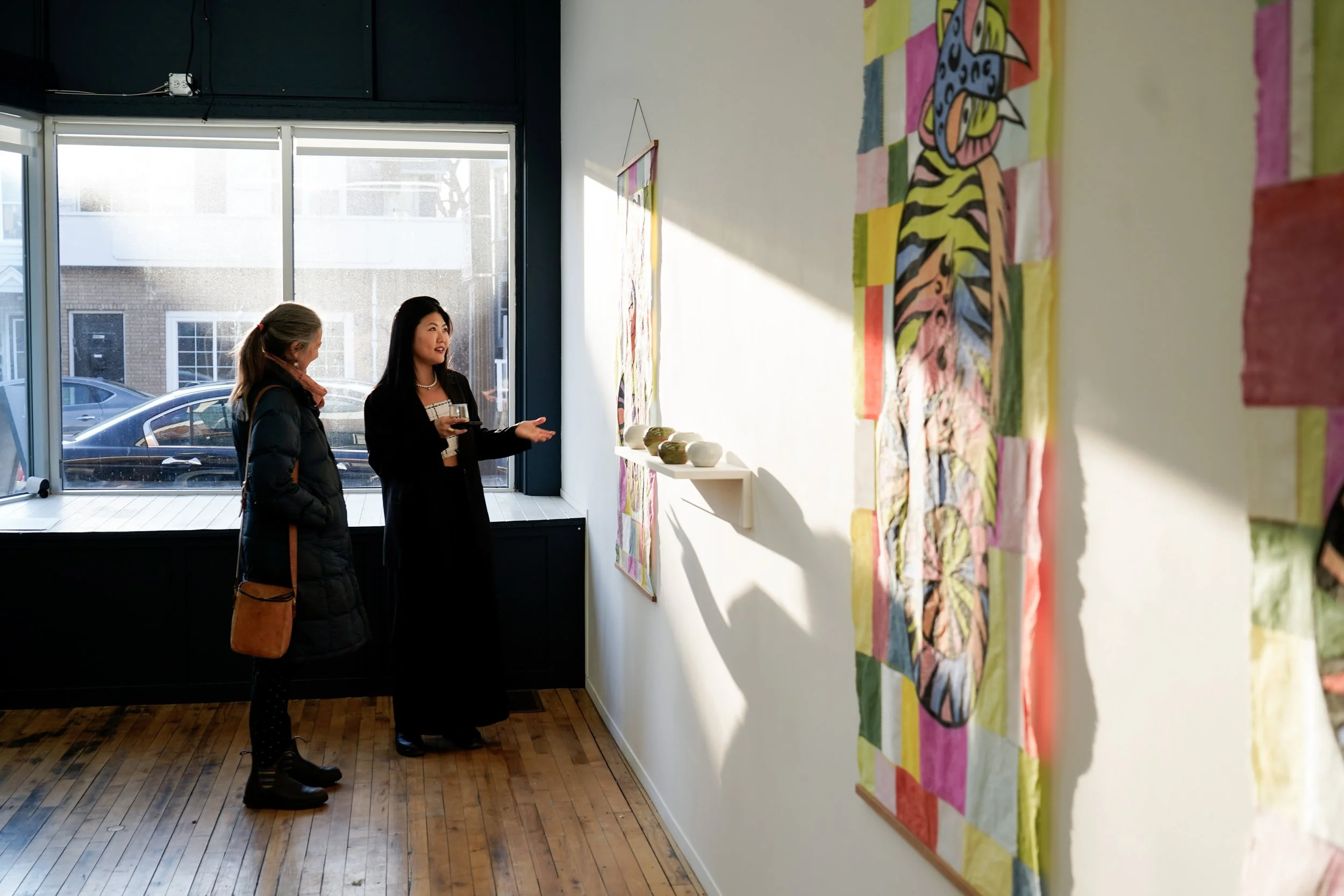
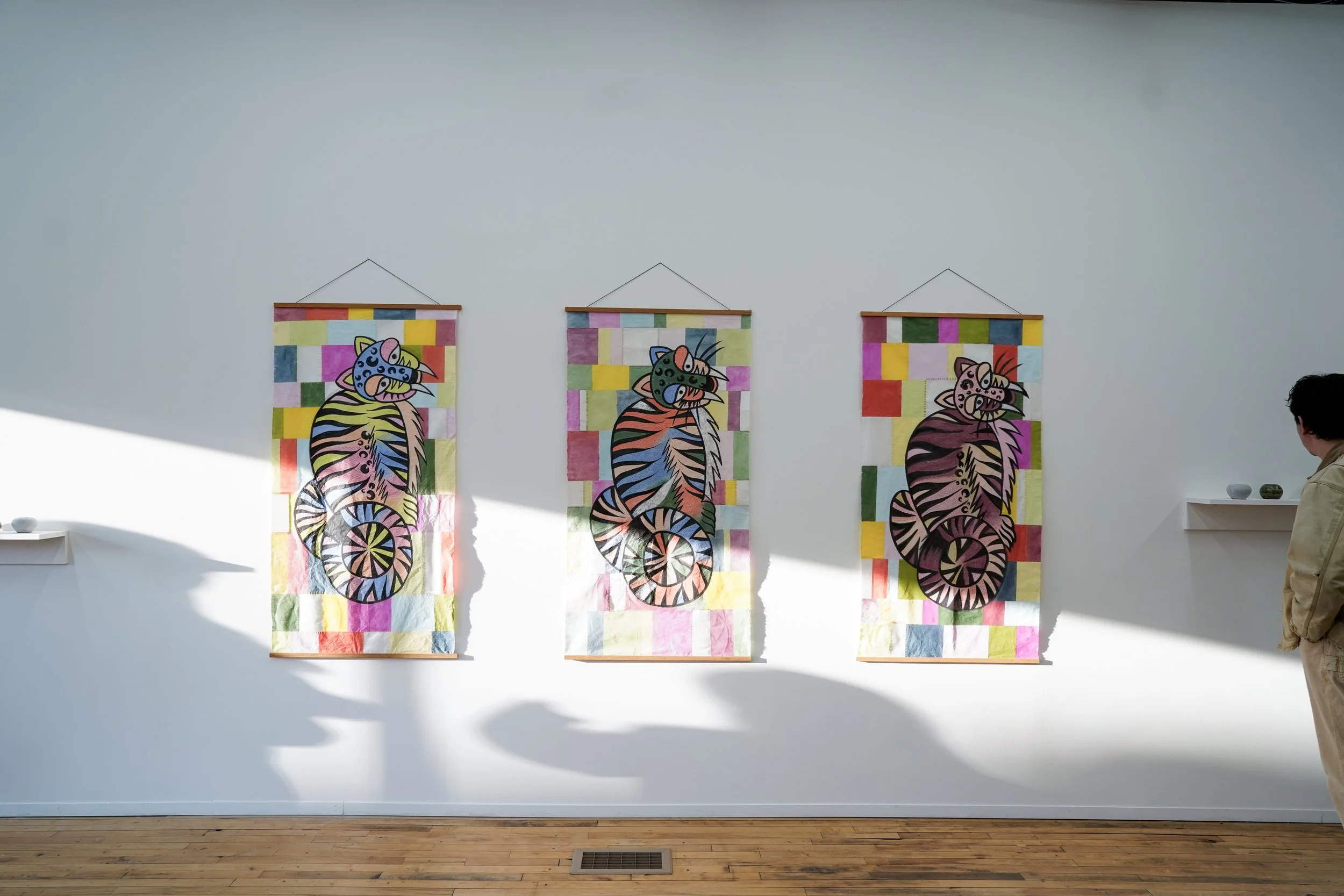
Each tiger on the 8 talismans are loosely traced from the previous, forming a continuous lineage of guardians moving in the same direction. The cultural symbols that ward off misfortune are suspended within the jogakbo backgrounds. Korea’s geometric patchwork tradition of assembling fragments of what is available into something whole is shaped by necessity and preservation. The labour of making what holds the precious is carried forward.
The surface holds evidence of time and the hand at work. The Hanji that has traveled back and forth from the artists’ home of Korea and Thailand endures repeated handling and restructuring. The materials in the space withstands being subjected to continual transformation. The hanji yields and softens, losing stiffness and pristine but gaining malleability, a paradoxical strength reflected on the marred surface that mirrors the tenacity required through lived experiences.
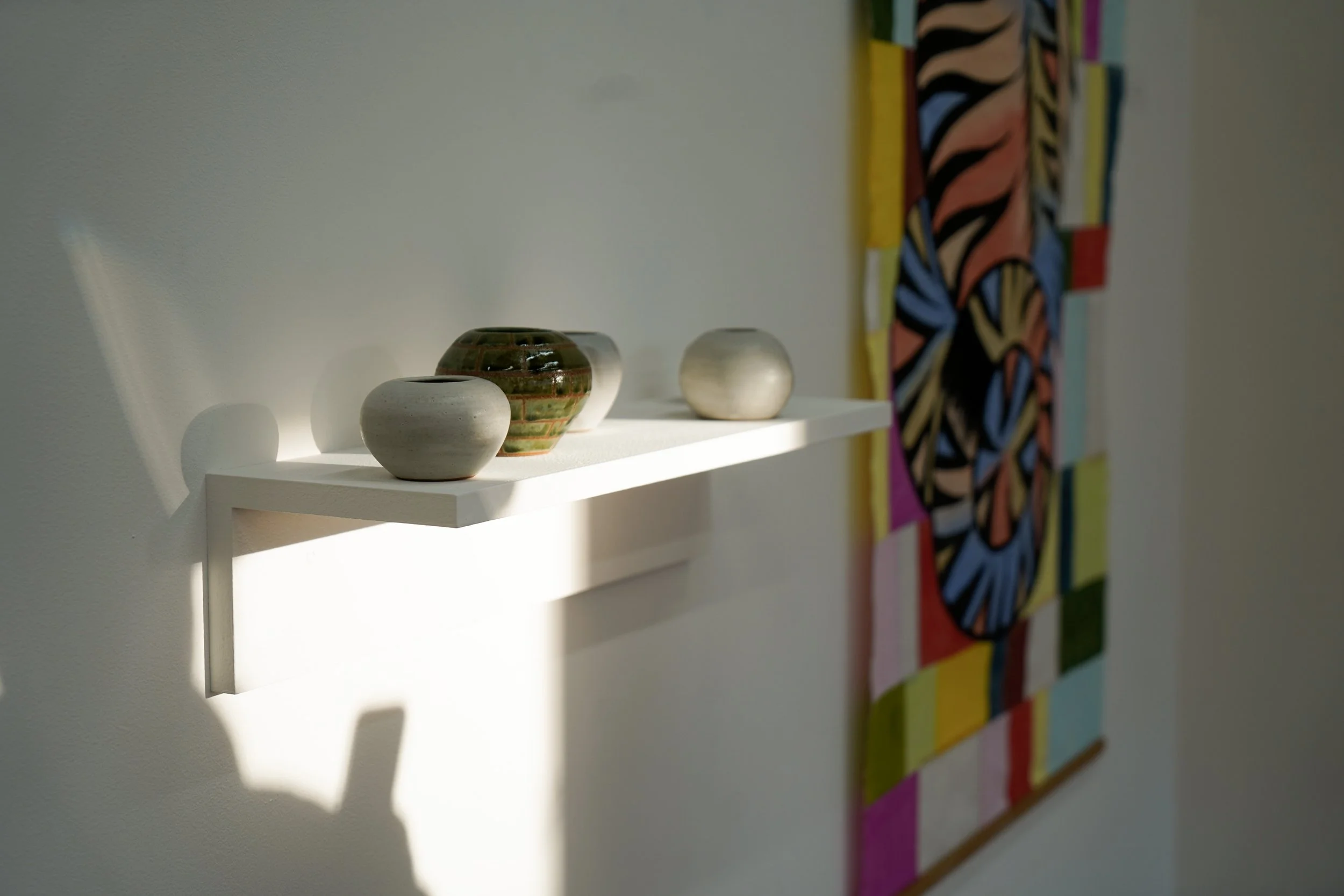
Vessels gathered are a nod to Joseon moon jars, privileging weight and touch over uniformity. Clay responds to the state of the body that shapes it. The purpose is balance, not perfection, achieved during the throwing process. Whether the object feels resolved is defined how it settles convincingly in the hands. Symmetry offers orientation and variation resists rigidity.
Emerging from a life lived across multiple states, the work moves through layered inheritances. Forms are carried forward, adjusted through practice, and made present through the body.
Across the exhibition, tending becomes a continuous act, the method. Attention functions as care and meditation, as a way of reassembling the self before extending outward. What is mended internally shapes the reach beyond the self.